
Behind every medicine is a story—a story of people who make it possible. In the series Where Craft Meets, Daiichi Sankyo explores and celebrates the people behind our medicines and shares how our unique crafts contribute to our collective mission to help patients.
Over her 17 years in Medical Affairs at Daiichi Sankyo, Tamy Recchia has seen firsthand how science can translate into hope for patients and families. Discover what keeps Tamy motivated and the impact she makes every day through her craft of orchestration.
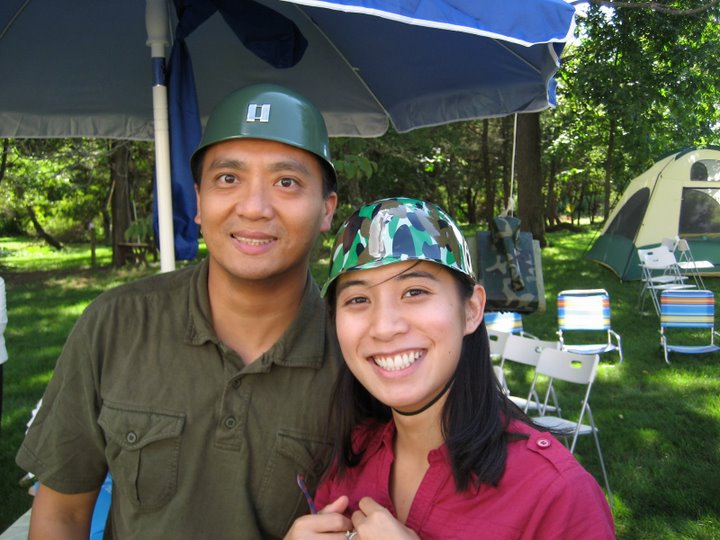 Tamy Recchia's brother-in-law, Tam Huynh, is a constant source of inspiration.
What Providing Time and Hope Mean to Me
The role of the Medical Affairs function at a pharmaceutical company is to bridge the gap between scientific research and real-world medical practice, ensuring new medicines are used safely, effectively and ethically to benefit patients. Medical Affairs teams are responsible for delivering education, answering clinicians’ questions, and understanding what they need to provide the best possible care.
While I never doubted the importance of our work, it really hit home when I heard it expressed from the perspective of my brother-in-law, who was battling metastatic lung cancer. “My doctor needs to know so much to stay well-informed of new treatments and advances,” he said. “What you guys do in Medical Affairs is so impactful.”
I realized at that moment how helping healthcare providers navigate the ever-expanding world of medical knowledge has a direct and meaningful effect on patient outcomes. My brother-in-law’s courage and relentless pursuit of information allowed him to extend his time with us—to teach his son how to drive, to see his wife complete graduate school—precious years we never expected. It’s one of my core responsibilities to help patients like him know what is new, what is possible, so they can have more time with those they love.
Time Flies When You Are Making a Difference
When I think about the reasons I joined Daiichi Sankyo, they are the same ones that have kept me here for over 17 years. I remember being drawn to the company’s dedication to scientific discovery and drive to make progress in medicine. When I joined, we were working on groundbreaking medicines and, today, our pipeline continues to deliver innovations that push boundaries and redefine possibilities for patients with unmet needs.
Working here has allowed me to witness the evolution of medicine—from initial research stages to clinical breakthroughs to life-changing therapies reaching those who need them most. Every day, I am reminded that the medicines we introduce are not just products. Our work can help extend lives and improve their quality.
Another thing that drew and kept me here; the employees I met during the interview process shared my enthusiasm for developing and growing. As I had hoped, over the years my managers have supported me in trying new things and taking on more responsibilities, from a stretch assignment early in my career supporting clinical trials and operations to serving as the U.S. lead in our function’s globalization efforts.
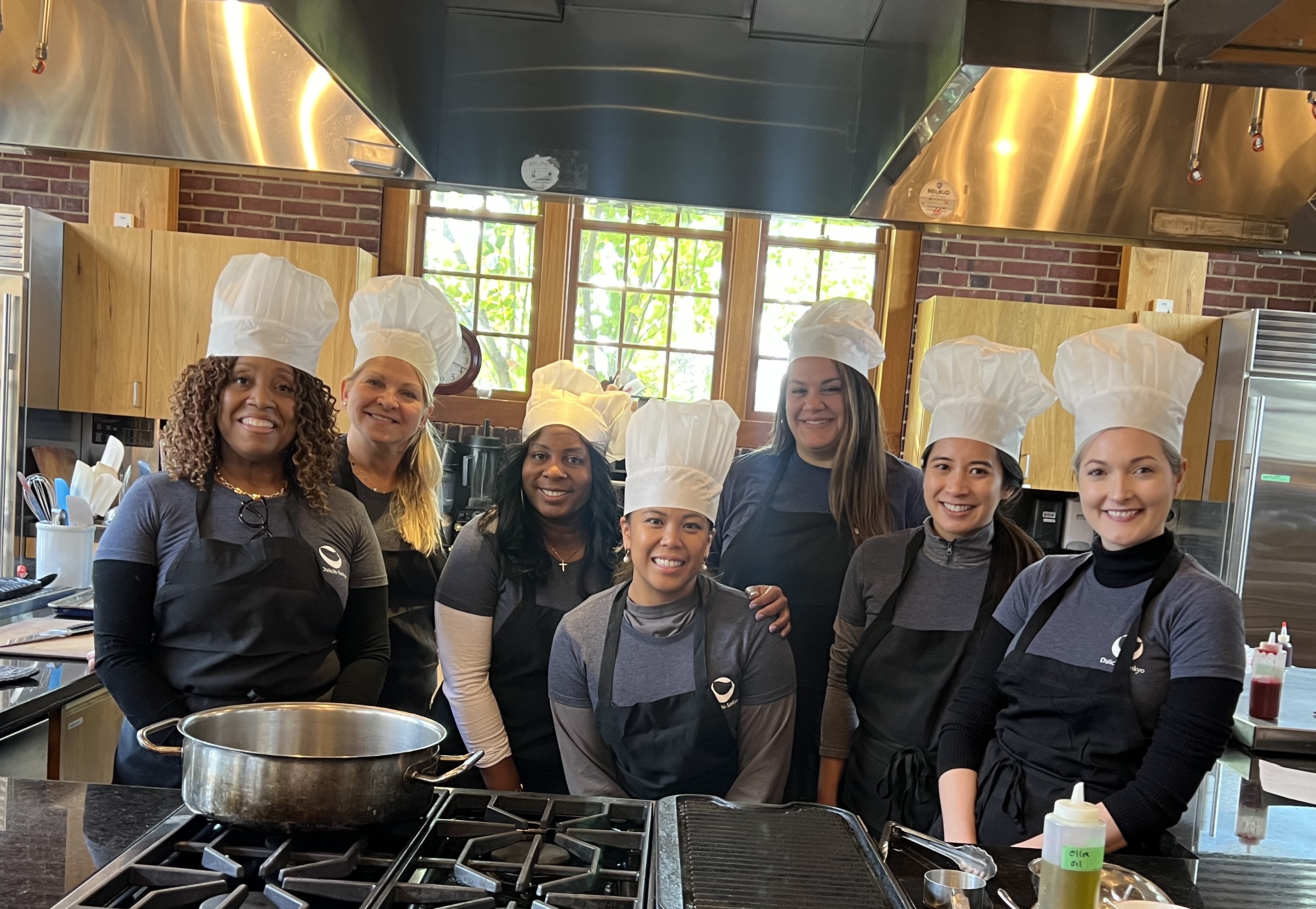 Tamy Recchia, second from right, fosters an environment on her team where curiosity is encouraged and innovative ideas are welcomed.
My Craft is Orchestration
When I explain what I do to my children, family or friends, I tell them I’m like a conductor in an orchestra. I bring together teams where each member contributes their own “tune” or “sound” to create something truly remarkable. In an orchestra, individual instruments produce beautiful music on their own, but the real magic happens when they unite through a shared purpose, each contributing their part to a masterpiece. Just like conductors don’t always see the audience, I don’t have direct contact with patients. Yet, I know our work is delivering what they need and our contributions are making a difference.
In Medical Affairs, orchestration means aligning resources, processes, systems, tools and technology so everyone can perform at their best. It’s about recognizing that every team member’s expertise is valuable and that our collective success depends on integrating diverse skills and voices. When diverse perspectives come together, we amplify our impact and ability to innovate.
So many years into my career, I still find myself inspired by the science, driven by a strong sense of purpose, and enthusiastic about orchestrating teams. Knowing that our work directly contributes to better patient care and more time and hope for patients and their families is the reason I continue to give my best.
Watch Tamy Recchia in “Where Craft Meets”
Tamy Recchia’s craft—orchestration—is about bringing people, knowledge and purpose together to support a patient-centered approach at Daiichi Sankyo. To learn more, watch “Where Craft Meets with Tamy Recchia.”
Explore more videos in the “Where Craft Meets” series, featuring Daiichi Sankyo employees who embody shokunin kishitsu, or the craftsperson spirit.
Suggestions
Behind every medicine is a story—a story of people who make it possible. In the series Where Craft Meets, Daiichi Sankyo explores and celebrates the people behind our medicines and shares how our unique crafts contribute to our collective mission to help patients.
Cancer care is never carried out by one person alone. It is a team effort, with oncologists, nurses, pharmacists, pathologists, patient support teams, caregivers, and many others all supporting the patient.
I had no idea what to expect when I was deployed to Ground Zero. In moments like that, you do not hesitate, you jump into action. You do everything you can to help reconnect families.